Dog Products & Supplies
 Dog Food
 Cat Products & Supplies
 Cat Food
 Reptiles
 Small Animals
 Aquarium
 Bird Products & Supplies
Recovery Cones & Elizabethan Dog Collars
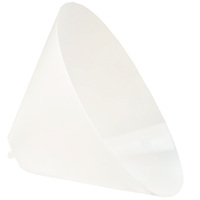

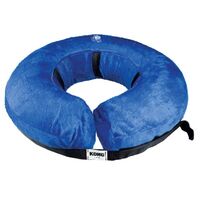
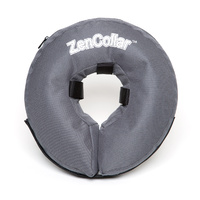
Our dog recovery collars are the perfect solution to stopping your pet getting to any healing wounds or stitches after surgery. A less stressful alternative to the standard dog cone collar also known as an elizabethan collar or e-collar is an inflatable soft recovery collar, which provides relaxing comfort while they're healing. Otherwise, choose the classic elizabethan collar or soft cone for dogs also known as the cone of shame, which is the style you often see on dogs after a visit to the vet. We recommend that you have your dog's elizabethan collar ready for post surgery to avoid them getting to the wound.
Dog Recovery Collar Buyer's Guide
A practical, opinionated guide to the three recovery collars your dog will actually have to wear, and how to pick the right one.
After a surgery, injury, or skin condition, your vet will almost certainly send you home with instructions to prevent your dog from licking, scratching, or biting the affected area. The recovery collar (sometimes called an e-collar, cone, or "cone of shame") is the standard tool for the job. But not all recovery collars are created equal, and the right choice depends on your dog's size, temperament, the location of the wound, and how long they'll need to wear it.
This guide walks through the three most common types: plastic Elizabethan collars, soft Elizabethan collars, and inflatable collars. We'll cover how each one works, who it's best suited for, and what to watch out for before you buy.
Why the right collar matters
A recovery collar's only job is to stop your dog reaching a healing wound. If the collar fails at that, stitches get torn out, hot spots get worse, infections set in, and you end up back at the vet. On the flip side, a collar that's too restrictive can stress your dog, stop them eating and drinking, and turn a one-week recovery into a miserable ordeal for the whole household.
The goal is a collar that blocks access to the wound while letting your dog live as normally as possible.
1. Plastic Elizabethan Collars (Dog Cone)
Best for serious recoveries.
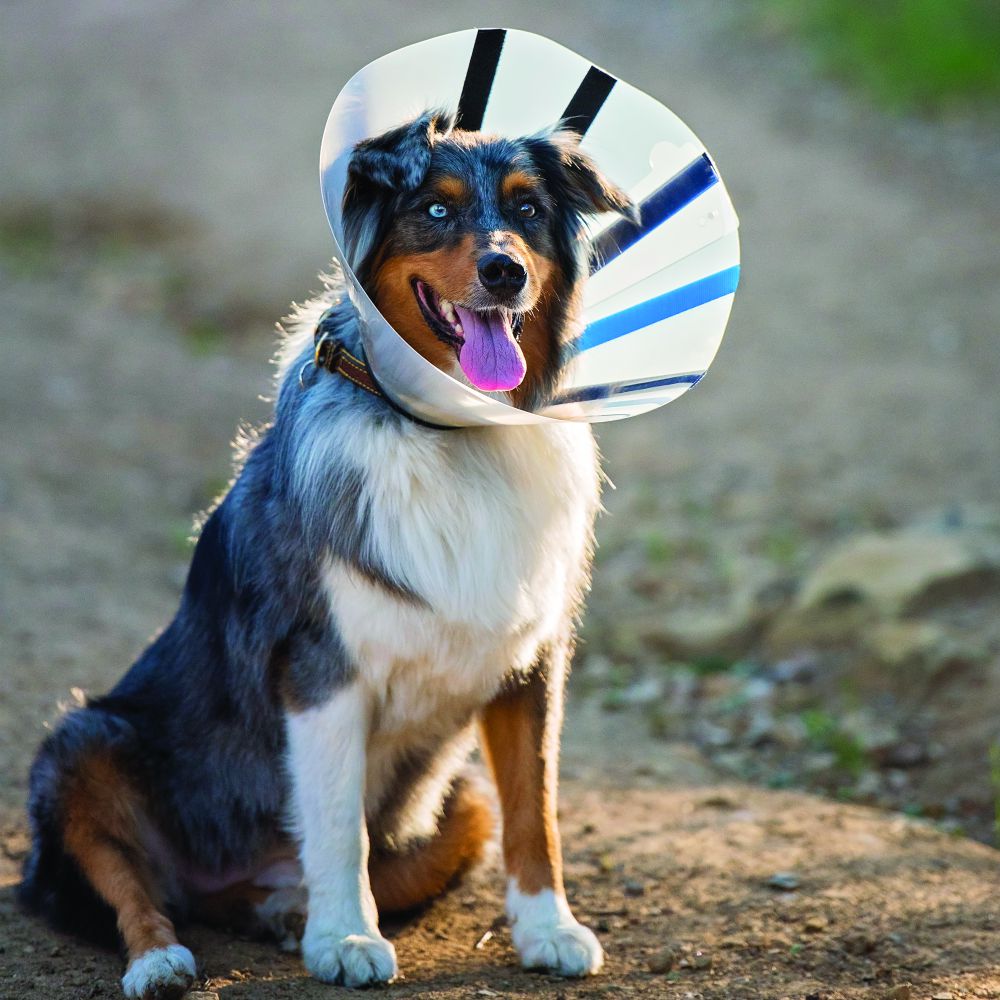
The classic. A rigid, cone-shaped plastic collar that fastens around your dog's neck and extends past the nose.
.jpg)
Product: Buster Clic Elizabethan E-Collar
How it works
The cone creates a physical barrier between your dog's mouth and the rest of their body. Because plastic is rigid, your dog can't bend or squash it to reach a wound.
Best for
Plastic Elizabethans are the gold standard for serious surgical recoveries, particularly when the wound is on the body, legs, or tail. They're what most vets default to because they work. They're especially appropriate for dogs who are determined lickers or who tore wounds open in previous recoveries to protect places.
Pros
- The barrier is genuinely impossible for most dogs.
- Inexpensive and widely available, easy to clean, and many are transparent so they don't restrict your dog's peripheral vision.
- Most have flexible plastic so they can bend a little to give your dog more freedom.
Cons
- Bulky and noisy. Dogs will bump into walls, doorways, and the back of your legs constantly. They struggle to eat and drink from a normal bowl.
- Some find them genuinely distressing for the first day or two.
What to look for
Get the size right. The cone should extend roughly an inch past your dog's nose when their tongue is forward and the collar fits snug at the neck. Look for soft, padded rim trim or you can add some yourself. Check the neck opening fastens snugly, and two-fingers-under is the right tightness. Most have a real difference for comfort over a week or more of wear. Transparent versions are kinder for nervous dogs.
2. Soft Elizabethan Collars (Soft Dog Cone)
Best for mild-to-moderate recoveries.
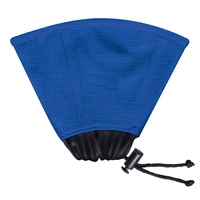
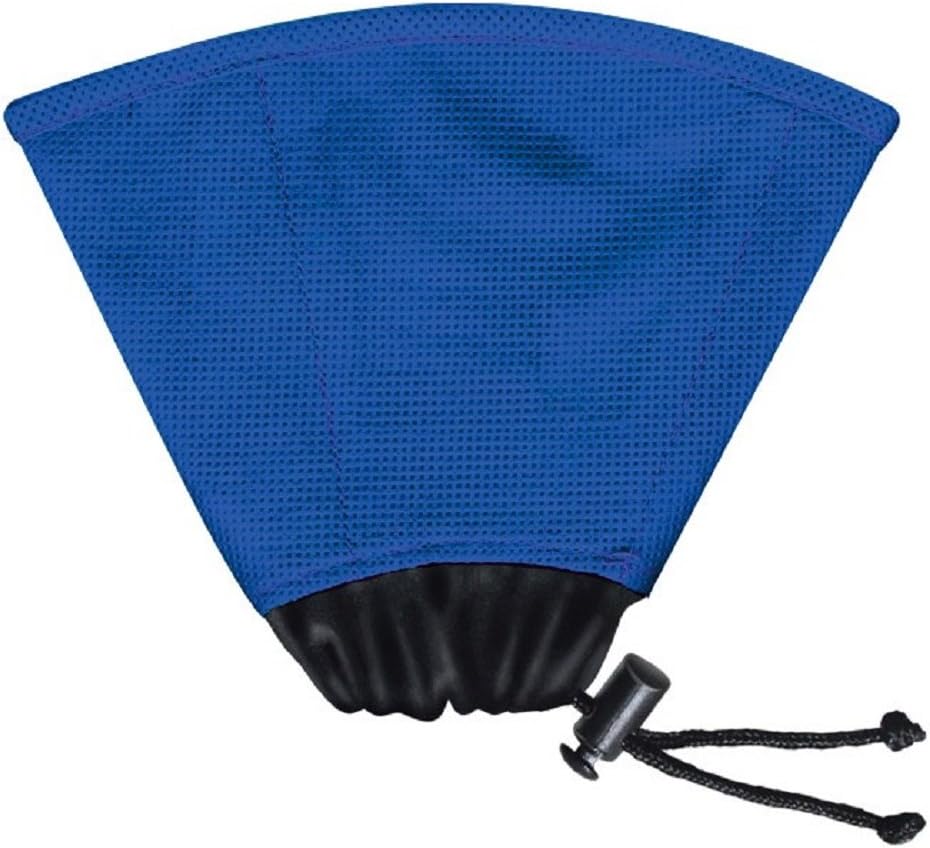
A cone-shaped collar made from fabric, foam, or flexible padded material rather than rigid plastic. Some look like a fabric version of the classic cone, while others resemble a wide, floppy ruffle.
How it works
Same principle as the plastic version. Just a softer, more forgiving material. Some are reinforced with internal stays to hold their shape, others rely purely on the fabric.
Best for
Dogs recovering from minor procedures, dogs with wounds on the upper body or head where a softer barrier still works, and dogs who become highly stressed by rigid plastic cones. Also a good choice for the later stages of a longer recovery, once the wound is mostly healed but you still want some protection.
Pros
- Much more comfortable for sleeping. Quieter around the house, less likely to bash into furniture. Easier to fold and store, and many are machine washable. Eating and drinking is usually more manageable than with a rigid cone.
Cons
- Determined dogs can sometimes squash, fold, or push past a soft cone to reach a wound. Less effective for serious surgical sites. Can lose its shape over time. Some are flat the moment the wearer starts demanding.
What to look for
Check the stiffness. A soft collar that flops completely won't prevent licking. Look for one with internal stays or structured padding. Make sure the closure system is secure (Velcro, buckles, or drawstring all work, but cheap Velcro wears out fast). Confirm it's machine washable, because soft collars get grimy fast.
3. Inflatable Collars
Best for chilled-out dogs and comfort.
A doughnut-shaped, inflatable ring that fastens around the neck like a travel pillow. The dog's head sits inside the ring rather than inside a cone.
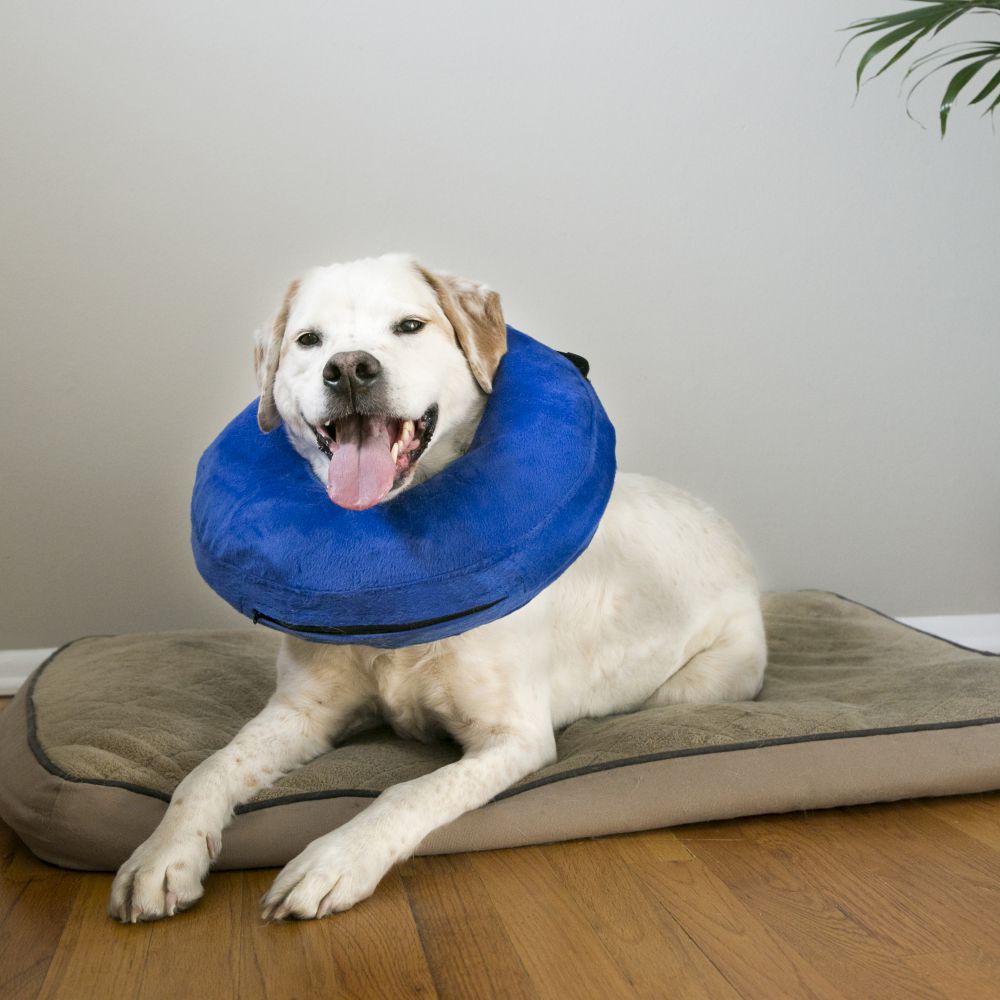
Product: KING Cloud Inflatable Collar
How it works
Instead of blocking access with a forward-extending cone, the inflatable ring limits how far your dog can bend or turn their neck. They physically can't reach most parts of their body because the ring won't compress enough to let them.
Best for
Dogs recovering from wounds on the upper body where neck restriction is enough to keep them away from the site. Also excellent for sleeping comfort during a long recovery, and they suit dogs particularly distressed by cones blocking forward vision.
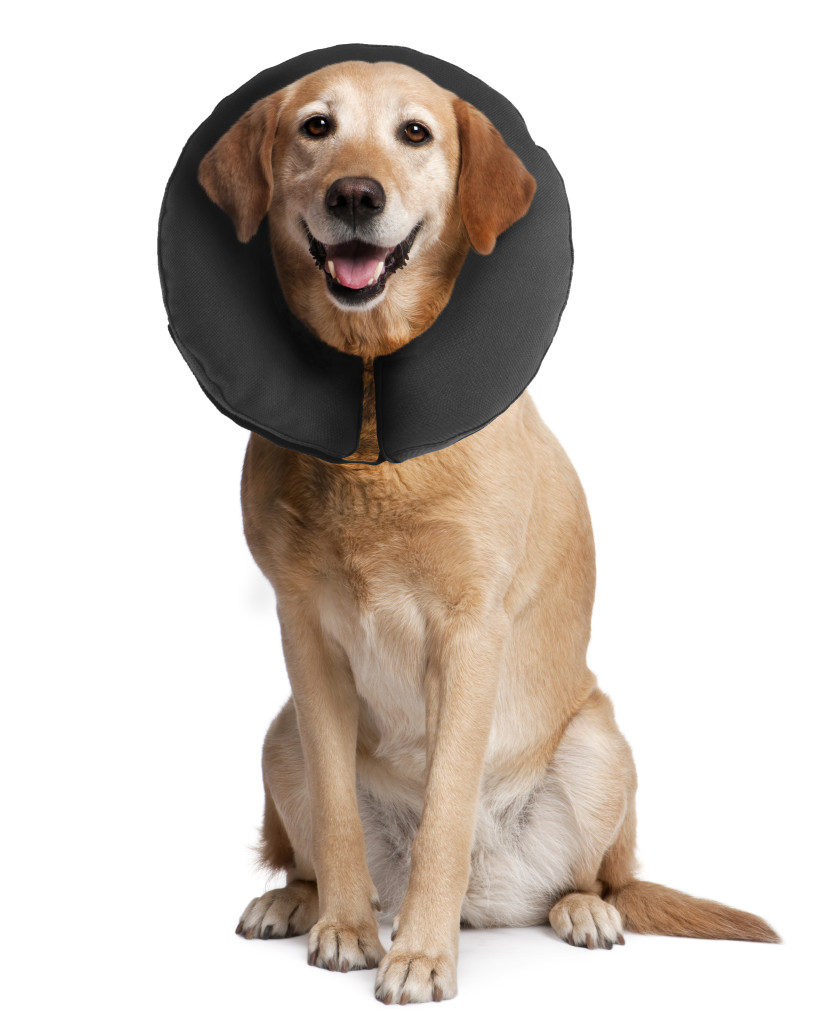
Product: ZenPet Pro Comfortable Recovery Collar
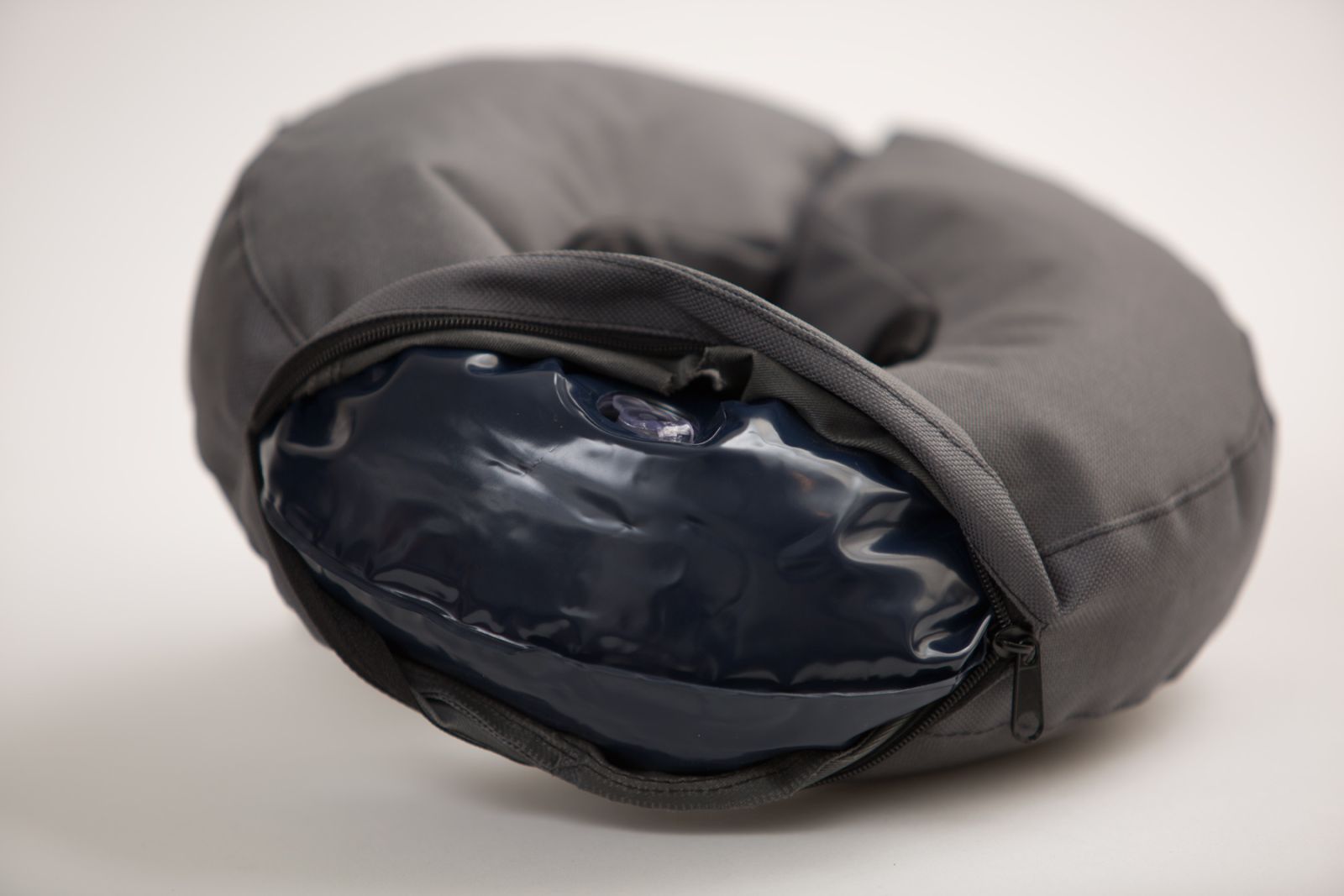
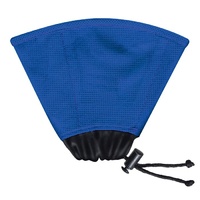
Product: ZenPet Pro Comfortable Recovery Collar
Pros
- Comfortable. Doesn't block vision or hearing. Much easier to eat and drink with, and many have removable covers for washing.
- Travel-friendly because they deflate.
Cons
- Won't work for every wound location. A dog wearing one can still reach their front paws and chest, so they're a poor choice for paw injuries or front-leg incisions. Determined chewers can puncture them.
What to look for
Measure your dog's neck and follow sizing carefully because an over-inflated or under-sized collar won't restrict properly. Look for a removable, washable outer cover, a scratch-resistant or chew-resistant outer (or layer of nylon-padded protection). Check the inflation valve is secure and won't deflate overnight. Some models attach to your dog's regular collar for extra security against slipping.
At a glance
| Plastic E-Collar | Soft E-Collar | Inflatable | |
|---|---|---|---|
| Barrier level | Highest | Moderate | Location-dependent |
| Sleeping comfort | Low | Medium | High |
| Eating & drinking | Difficult | Moderate | Easy |
| Vision | Restricted | Restricted | Unrestricted forward |
| Noise / clumsiness | Constant | Occasional | Very low |
| Typical price | Lowest | Mid | Highest |
| Durability | High | Moderate | Puncture risk |
How to choose
Start with what your vet recommends. They've seen the wound and they know your dog. If they specify a rigid cone, follow that advice for at least the critical healing window.
Beyond that, consider three factors. First, where is the wound? If the wound is on the front paw or chest, neither a soft cone nor an inflatable collar will protect it. Second, how determined is your dog? A laid-back senior who doesn't bother licking much has different requirements from a young, anxious rescue who fixates on every itch. Third, how long will recovery be? For a two-week recovery, comfort matters a lot more than for a three-day vet visit.
Many owners end up buying two. A plastic Elizabethan for the first few days when the wound is most vulnerable, and a softer or inflatable option for the longer tail of healing.
Sizing tips for all three
- Measure your dog's neck circumference with a soft tape measure, not too tight.
- Most manufacturers also want the distance from the base of the neck to the tip of the nose.
- Don't size up "to be safe." A loose collar is worse than no collar.
- Fit should be snug at the neck, with room for two fingers underneath.
- Watch your dog for the first hour after fitting. They should be able to walk, lie down, and turn around without getting stuck.
Frequently asked questions
What are dog Elizabethan collars?
Elizabethan collars or e-collars stop your dog from getting their teeth to parts of their body during recovery. Essentially they are a cone for dogs. They will most often, used to stop your dog from licking their stitches or healing wounds.
How my dog love to wear a cone after surgery?
Your dog does not have to wear a cone after surgery. However, it is highly recommended your pup wears it, so the wound has time to heal. If your dog is keen to lick or chew the area, it can be detrimental to the healing process.
Can my pet wear an e-collar all day?
Yes. If your pet is using an e-collar, it is recommended they wear it most of the day, removing it only at meal times. If you are using an inflatable collar, your dog can wear this all day as they can pretty much do all of their daily activities without restriction.
How long should dogs wear a cone after surgery?
This will vary on the type of surgery and the speed of healing. It may be anywhere from a couple of days to a couple of weeks. Your vet will be able to tell you how long your dog will need to wear it.
What is the best dog recovery collar?
Although the classic Elizabethan cone collar is most loved by vets, you can find the inflatable soft recovery collars or some of these are the best of both worlds. The inflatable collars are a general softer than a plastic one and they generally allow your dog to drink and eat almost normally during the recovery. Your dog won't bump into things or get its head stuck in furniture (which often happens with the classic plastic cone). However, they will not be able to reach down to the legs and lower body so well, which can be needed for some dogs to allow them to be groomed.
Where can I find a dog e-collar near me?
You will be able to find a dog recovery collar online and at most pet stores. PETZOO offers a variety of dog cone collars and you'll have them at your door in a few short days.
One last thing
The best recovery collar is the one your dog will actually wear for the full healing period. A perfect rigid cone that you take off after two days because you feel sorry for your dog is worse than a soft collar they tolerate for the whole fortnight.
Be realistic about your dog's temperament, get the sizing right, and don't be afraid to swap styles partway through recovery as healing progresses. We have customers come into our store everyweek that will swap the recovery collar, as the original is not suitable. We find most commonly people that have been using a cone want to swap to an inflatable collar so their dog is more comfortable.
Checkout with Afterpay, Zippay, Visa, Mastercard or American Express.